
Pyth Network: Bridging Wall Street and Web3 with ETF Price Feeds

When assessing and auditing new DeFi platforms who are worthy of capital deployment, I'm always curious about oracle integration. While @Chainlink has been the kingmaker since it launched in 2019, @PythNetwork has been making very real waves over the last two years.
When I served on the Cyber Republic Council for @ElastosInfo in 2024, we were exploring oracle options for the chain. I delved deep researching Pyth and was impressed with their model, general approach, and tech infrastructure. Originally known for pioneering real-time crypto market data feeds, Pyth is now expanding its reach into exchange-traded fund (ETF) price feeds, pushing the boundaries of what’s possible in decentralized infrastructure.
This strategic move, announced on June 10, 2025, marks a critical inflection point in the evolution of DeFi, aligning with broader trends of regulatory clarity and explosive growth in 2025.
As blockchain technology matures and institutional adoption accelerates, the distance between traditional finance and decentralized finance is shrinking. Few projects embody this convergence as precisely as Pyth.
Let's talk about what this announcement could mean.
A Convergence of Worlds
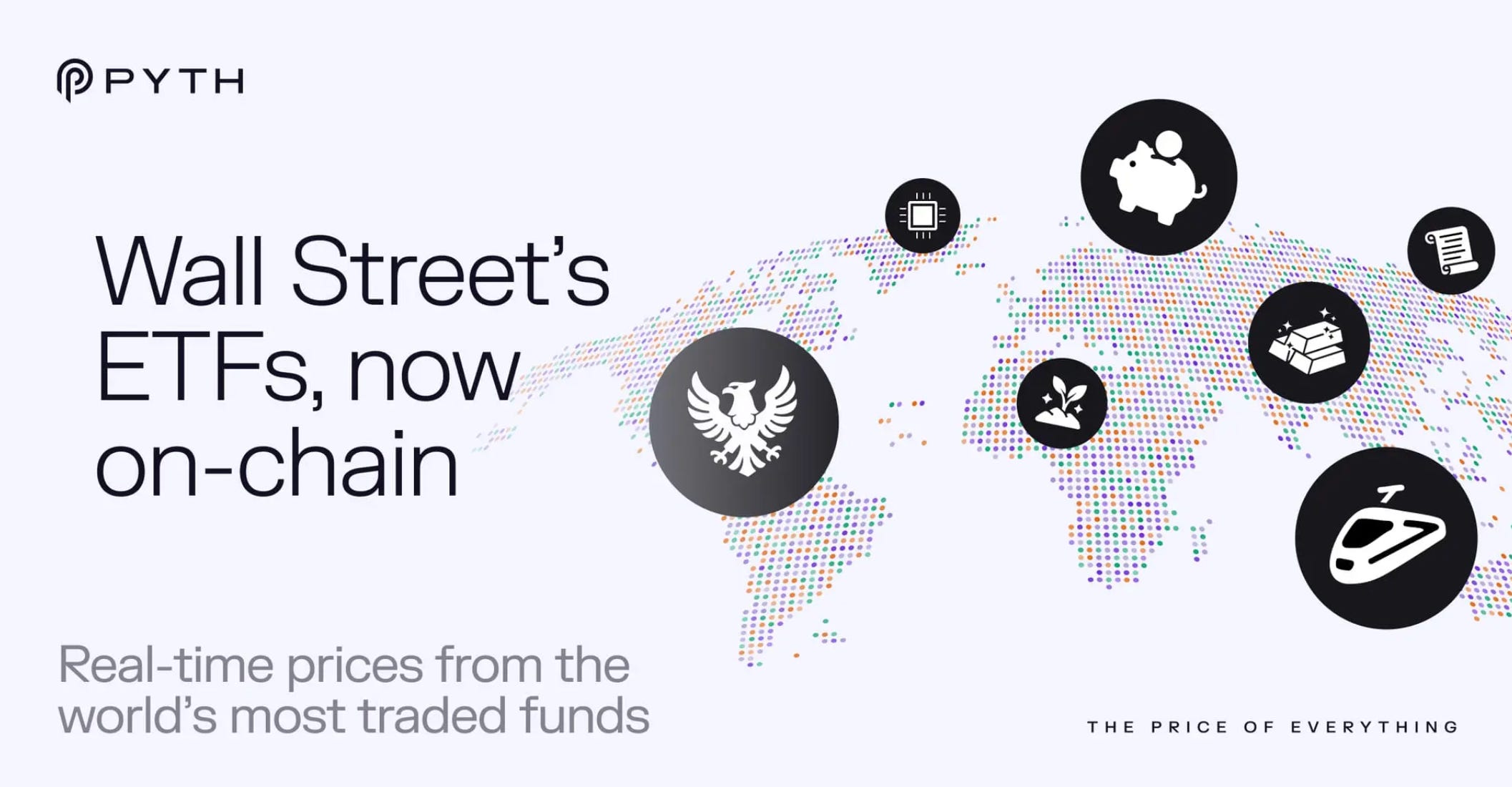
Pyth's latest initiative brings ETF price feeds to the DeFi ecosystem, supporting a diverse range of asset classes including U.S. equities, global indices, and real-world assets like gold and REITs. This expansion arrives at a moment when the financial landscape is undergoing a lot of change. The U.S. SEC’s approval of several spot Ethereum ETFs earlier in the year, following the landmark Bitcoin ETF approvals in 2024, has signaled a new era of regulatory acceptance for digital assets.
Simultaneously, the European Union’s Markets in Crypto-Assets (MiCA) regulation has come into full effect, providing a clearer framework for crypto and DeFi operations. These developments are clearing the path for tokenized traditional financial products to operate securely and transparently on-chain, and Pyth’s ETF feeds are perfectly positioned to capitalize on this opportunity.
At the heart of Pyth’s advantage is its architecture. Unlike other oracles that aggregate data from external APIs, Pyth sources data directly from institutional-grade entities like trading firms, exchanges, and market makers like @Binance and @Cboe. This first-party data model ensures sub-second updates as fast as 400 milliseconds, a critical feature for DeFi protocols that require precision and speed.
For me and for DeFi, Pyth’s speed and fidelity are especially valuable as DeFi evolves to support more complex financial instruments like structured products, derivatives, and tokenized ETFs.
The Infrastructure Behind It
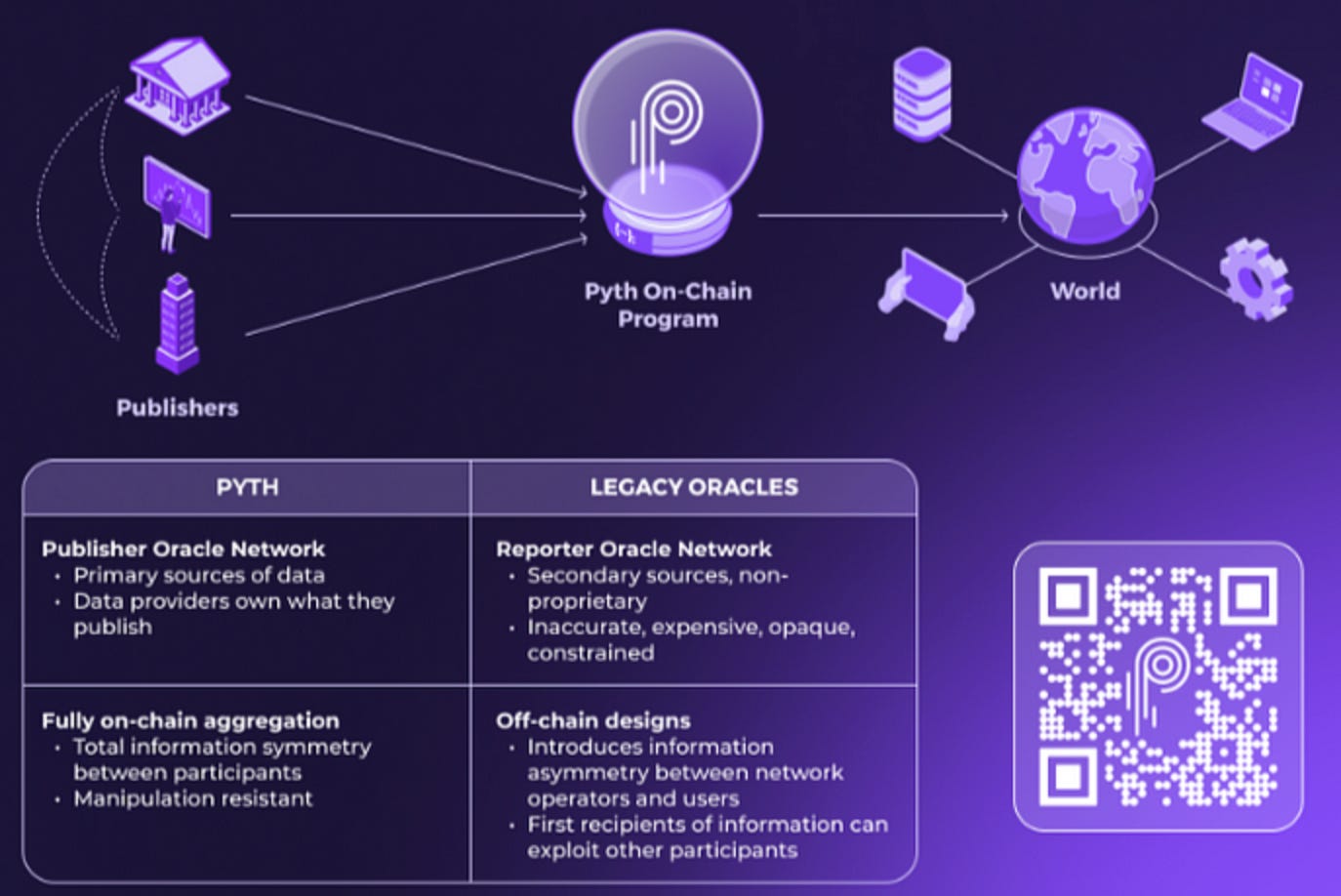
Pyth’s ETF feed launch is not just a product expansion but a signal of the project's commitment to infrastructure. The network’s pull-based oracle model allows smart contracts to request data on-demand, reducing gas costs and enabling high-frequency updates. This is complemented by Pyth’s confidence intervals, which provide insights into market volatility, enhancing decision-making for protocols during turbulent conditions. As laid out in their announcement, these feeds are published across 100+ blockchains via the @Wormhole bridge, ensuring broad accessibility and scalability.
The timing of this announcement coincides with a DeFi trading boom, particularly within the @Solana ecosystem, where Pyth is natively integrated. Solana saw an incredible increase in trading volume in 2024, driven in part by innovations like Pyth Lazer, which enhances derivatives trading precision by providing real-time price confidence intervals. This growth underscores the demand for reliable, high-speed data, and Pyth’s ETF feeds are a direct response to that need.
Pyth is not only powering DeFi apps but laying the rails for a global, data-rich, decentralized financial system.
Real-World Impact
The practical impact of Pyth’s ETF feeds is already being felt. DeFi protocols like @DriftProtocol and @MeteoraAG, which rely on Pyth’s 400ms price updates, are processing $100MM+ in daily trading volume, demonstrating the tangible value of Pyth’s data infrastructure in enabling high-frequency trading and other latency-sensitive applications. This precision is crucial as DeFi evolves to mirror or compete with traditional financial instruments, from index funds to dividend-focused portfolios.
In the ongoing "oracle wars," Pyth’s focus on speed, direct sourcing, and permissionless integration sets it apart from competitors like @Chainlink. While Chainlink has long dominated the space, Pyth’s ability to deliver institutional-grade data without delays or abstractions offers a compelling alternative. Pyth’s role in unlocking new possibilities for DeFi, including on-chain index tracking, thematic portfolios, and structured yield markets.
Tying It All Together

I love talking about the value of high-quality plumbing.
In turn, I see Pyth’s trajectory defined by its commitment to infrastructure, not hype. With data flowing across 50+ blockchains and supporting 1300+ price feeds, Pyth serves as critical middleware connecting the capital markets of today with the programmable finance of tomorrow. The inclusion of ETF price feeds suggests a future where oracles like Pyth are indispensable, enabling DeFi to offer products that rival (or complement) existing traditional financial systems.
Pyth's expansion into ETF price feeds speaks loudly to me as its vision of bridging Wall Street and web3 in real-time actualizes. In a year marked by regulatory progress, institutional adoption, and explosive DeFi growth, Pyth is positioning itself smartly in this new financial paradigm.
By providing real-time, reliable data from the world’s most trusted sources, Pyth is serving the DeFi industry in a way that matters. As we move deeper into 2025, I can see Pyth's role as a data democratizer will be crucial in shaping the future of finance, one price feed at a time.
Thanks for reading :)
If you enjoyed this content, make sure you subscribe to my substack so you don’t miss out on all sorts of long-form goodies.